Monday, 23 October 2017

Robin Livingstone 1920-2017


 My mother, Robin Livingstone passed away on Wednesday 11 October 2017.  In 2013 she won First Prize in an essay writing competition for the Ulster Countrywoman Magazine.  The piece was read out during her funeral on Saturday 13 October and is reproduced in full below.

From My Kitchen Window

The theme for my story is taken from the film, Casablanca, the lovely, sad song: 'As Time Goes By...' 

As I sit at my kitchen window the scene changes by the hour.  The post-man in his 'little red van' is the first to arrive.  Disappointing, no letters!  Only circulars about great deals from supermarkets and letters from charities asking for donations for worthy causes.  Today, nobody has time to write; it's all texts and emails.

The afternoon is quite exciting. I see businessmen home for lunch.  Wives drive to supermarkets.  Nobody walks to the local shop with a shopping bag today.  It's all trolley, plastic bags into the boot of the car and home.

Vapour trails in the sky mean the plane is on time as it flies towards City of Derry Airport.  The bus passes bringing children home from school.  The lady walks her dog and the neighbour's big ginger cat takes its afternoon stroll around the garden.

In the evening I watch for the crows on their way to roost in the tall trees, and keep warm near the road's lights during the night.

Sometimes, there is a spectacular sunset.  I stand in awe as the sky glows with colours - red, gold, yellow and primrose - a scene not even David Hockney could paint.

The road light outside my window has come on.  It's time to draw the curtains and call it a day.

Days of the week are known by what is happening outside my window.  There's the bin lorry, so it must be Thursday.  Sunday means neighbours drive off to church - men in tailored suits, ladies with freshly styled hairdos.  Sunday is  no day for jeans and anoraks.

As the seasons roll by I enjoy my garden.  Spring brings flowers - snowdrops to cheer cold January days and daffodils at Easter. May brings life to a my cherry tree.  I watch it from bud to leaf to blossom and sadly, it forms a carpet of pink petals on the grass. 

I look out of my window and listen as a pair of doves coo a duet on the telephone wires while a blackbird searches for worms to feed its chicks.

I welcome the swallows, and the butterflies feeding on nectar from the buddleia bush. Summer is here at last.

Autumn, although a season of fruit and Harvest thanksgiving services, fills me with a kind of melancholy.  I watch the leaves on my cherry tree colour yellow, then gold and drop off.

There's not much to see during the winter.  The only interesting thing was the arrival of a large flock of redwings. They stayed for three days feeding on the little apples on my crabtree.  Redwings are beautiful birds with black cap and red wings -they are a delight to watch.

Today I am glad to be sitting in my warm kitchen looking out.  Overnight, a snowfall has turned my garden into a sparkling Christmas card. I'll stay indoors.  Too old to throw snowballs or make a snowman.

Over the years I have seen babies in prams become toddlers, teenagers, adults and parents themselves: life, full circle.

To conclude, I must confess I have idled away too many hours sitting at my kitchen window.  I have never finished my 'Things to Do' list.  I just say like Scarlett O'Hara in the film, Gone with the Wind, - 'Tomorrow is another day!'

Monday, 19 May 2014

Giro d'Irlanda?


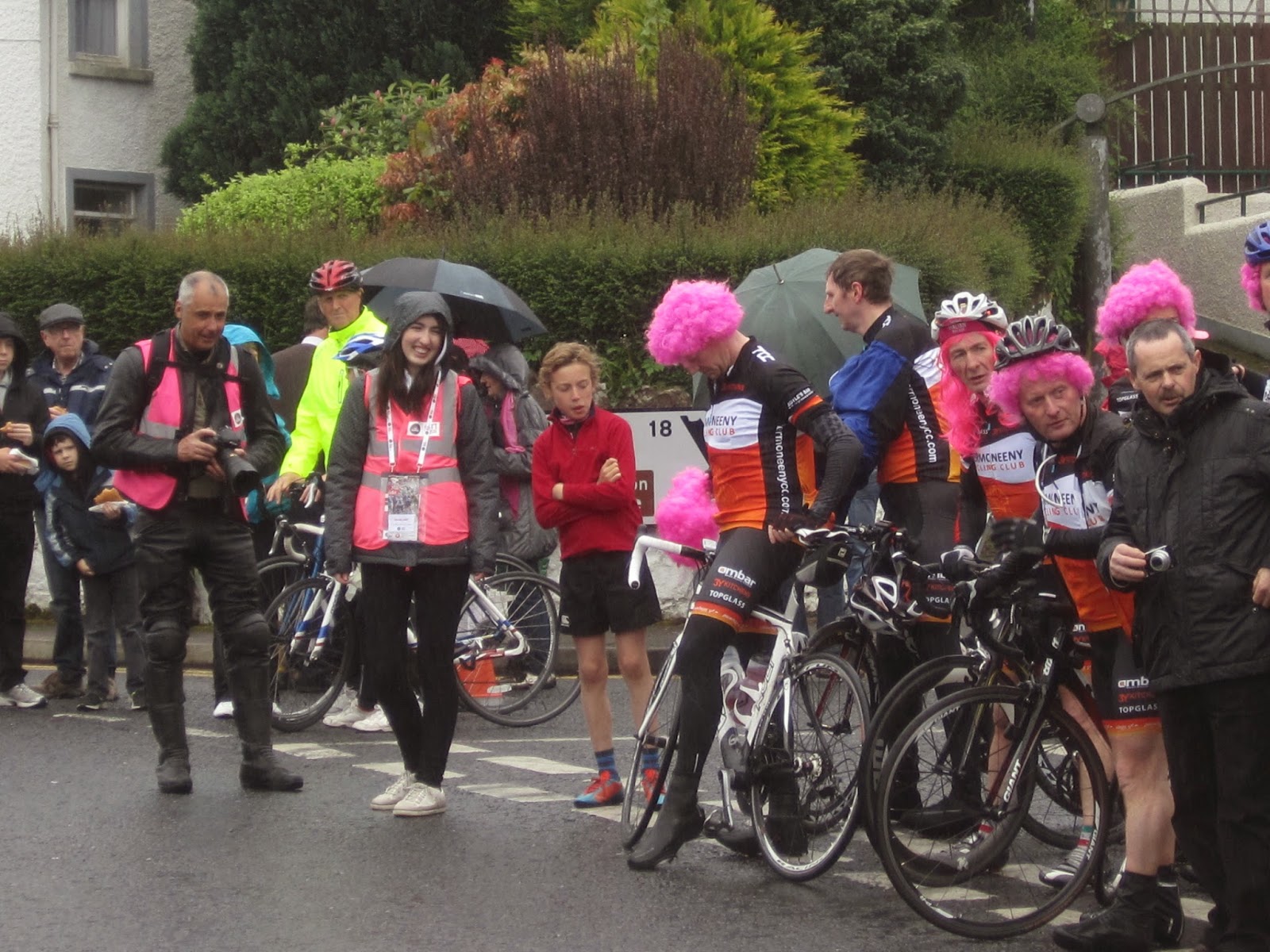
The Break Away Group appears

Traffic commercials in Northern Ireland are usually grim. Coffin shaped glasses of lager, a mashed up profile, howling parents punch home the message: driving is dangerous.  You are only a second away, a momentary lapse of concentration away from a horrendous pile-up of smoking metal and mutilated limbs.

But a more recent DOE information advert, broadcast before and after the Giro d’Italia, is different. The refrain is ‘Don’t Forget’ as cyclists and motorists bat back and forth advice on how to share the Road.  ‘Don’t forget I need a least the space of a car when you pass me.’ ‘Don’t forget it’s dangerous to pass me on the inside.’ The final image is of a motorist and cyclist at a junction saying in unison, ‘Don’t forget, I’m human too,’ followed by the banner, ‘Share the Road. Respect Everyone’s Journey.’

‘Not forgetting’ is something of an issue in Northern Ireland.  ‘Remember, Remember the 5th November’ children may intone in England but here we have a litany of dates to recall and commemorate, triggered by location-specific insignia.  A tour around the Sperrins Mountains or the Glens of Antrim will take in a succession of villages, which offer different coloured flags: Green, White and Orange ceding to Red, White and Blue.  When I was growing up in the seventies, even the graffiti oscillated from FTP to FTQ where the P stood for the Pope and the Q for the Queen.  The rest you can guess.

So it was a stroke of genius for someone to suggest that instead of murals, grim-faced election posters and tendentious flags, Northern Ireland would welcome the Giro d’Italia with ...pink.  Not a sugary, girly, Princess pink, but a school dinner blancmange, cherry blossom, boozer’s nose pink. Ostensibly marketed to celebrate the Maglia Rosa (or Pink Jersey) worn by the leader of the Giro d’Italia,  Northern Ireland embraced Pinkness with pride.  Yes, the Northern Ireland community found it could do ‘camp,’ and very well, as it happens.  Resulting in pink sheep, pink phone boxes, pink horses, pink tractors, pink gnomes, pink fish and chips. Even the Grand Master of the Orange Order welcomed the Giro d’Italia, although as far as I know, he declined to wear a pink sash.  And everywhere streets and roads were lined with pink bikes and a festive flutter of floral flags.

During the different stages, the spectators wore pink, even if it was only a magenta rain poncho thoughtfully (and presciently) provided by the Northern Ireland Tourist Board.  The Board had bid £4.2 million to entice the Giro d’Italia to come to Ireland and had beaten their nearest rival Venice, a curious place for a cycle race.  The Board’s slogan ‘Discover NI’ aimed to market the cities and coast to a global audience, who enchanted by the scenery would come in droves.  That didn’t quite work out, alas.  What the world wide audience actually saw on their screens was cyclists crashing on dangerously wet streets and not the iconic features of the coast, which swathes of rain made impossible to film.

The audience did discover something, however.  They knew that many in Northern Ireland like a procession. They probably knew that Ulster men and women are resilient, somewhat confirmed by the sight of hundreds of thousands standing in the rain, for four hours to see four and a half minutes of action.

But did they know we could be fun?  Like the riders on pink horses chasing the race until they ran out of beach.  Or the water skier keeping pace until he tried to wave at the cyclists and fell into the water.

And I discovered something too. I am a frequent visitor to my homeland and I would often remark to my husband on the potential there for excellent cycling.  How wrong I was. There is no potential.  People are doing it now. On the day of the race, we were impressed by the proliferation of cycle clubs,.  We encountered numerous bike riders on the narrow roads, moving as one like flocks of birds, heading to their favoured viewpoint.  We chose to coincide with the race at Cushendall, a small coastal village.

So what was the race actually like?  In the end it was brilliant!   We positioned ourselves on the bridge over the River Dall, able to see the bikes as they came round the sharp corner by the Curfew Tower.   

We waited a long time, standing around in the rain, observing the crowds, checking our cameras, checking our watches.  Until suddenly, we could hear the honking of a police bike.  It ushered in a host of pink taxis joining in the cacophony and waving huge pink foam hands out the windows. They were followed by a lull.  Quite a long lull.

 And then the bike outriders were back, beeping madly to tell us the race was coming.  It is easy to miss the leaders of the race, the breakaway group, and take them for a bunch of stragglers.  But you know that very soon afterwards (in this case, four minutes) the peloton will appear.

 Watching the pack of cyclists on the television, you notice how they pedal together, so fluid they seem to be coasting. They juggle jackets, no hands on the handlebars, poised like accomplished circus performers.

In the flesh, they were hard.  Fast. Pumping like a piston engine. And then they were gone....

On our journey home, we retraced the giro route, now bathed in sunshine and photographed moments of pink.  I hope too visitors will look at the Giro and see Northern Ireland in a different light, not just as a confection of sweet spots to touch and go.  I hope they would like to come and experience the community of cycling, just as we did.  And I hope they look forward to tapping into the culture of fun, which is so much part of the national character, and which we paraded in pink in the pouring rain.


Monday, 25 February 2013

The Alternative Clothes Show 2013


Strike a pose on the catwalk at the Alternative Clothes Show 2013.  This is a chance to showcase clothing that is precious.  Maybe it's handmade, or upcycled,  or it could be treasure from your granny or the local charity shop! 
The Alternative Clothes Show is on Sunday 17 March, 2-5pm at Hornsey Vale Community Centre, 60 Mayfield Road, N8 9LP.    
We are also looking for people to come and display or sell handmade items, upcycled clothes or locally sourced textiles.  Prices for tables are as follows:

  • Display: Free
  • Traders: £12
  • Private Sellers: £8

For further information: info@hornseyvale.org or ring Tanya 0208 348 4612
This is joint event organised by Transition Crouch End and Hornsey Vale Community Cente  We will be promoting clothes that are ethically sourced, local, or recycled.  We want to raise awareness about the ethical, environmental impact of the mainstream clothing industry.  And we want to have fun!
For more information: www.transitioncrouchend.org or www.hornseyvale.org


Monday, 21 January 2013

Seville Marmalade for 55p a jar

Unfortunately I can't do that.  

I tried. I bought 2 kilos of granulated sugar at 99p each and a kilo of Seville oranges for £1.99, from my local greengrocers, the Broadway Fruiterer in Crouch End (lovely old-fashioned name).  Plus two lemons for 60p.

I used River Cottage Pam the Jam's method and boiled the whole fruit for two and a half hours in two and a half litres of water at a steady simmer. I halved the now softened fruit, poked out the pips, and sliced the peel into fine strips.  Removing the pips was a bit of a chore, but handling the tender, squishy pith was quite pleasurable. 

Then I topped up the water to 1.7 litres, tipped in the pulp and peel and poured in two kilos of warmed granulated sugar. Plus the juice of two lemons to ensure the right level of pectin.  (I added in a little extra, because when I did the methylated spirit test for pectin, the liquid didn't clump.)

I placed the temperature probe in the preserving pan and waited for the alert,  knowing that when my concoction had reached 105 degrees C,  the setting point of 104.5 had been reached.  This made for a rather relaxed marmalade making session: the probe meant I could actually leave the pan for half an hour, confident that the resulting marmalade would set.

It did and this is how it looked.


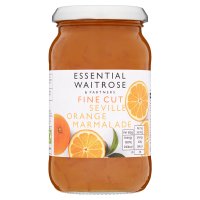
But then there was the stress of working out how much it cost. In the end, I made 3040g of marmalade and spent £4.57. Or to put it another way, each 100g of my marmalade cost 15p.  But that's still more than Waitrose's Essential Fine Cut Seville Marmalade which at 55p a jar, costs 12.1p for every 100g.

How can they do that?!!  My costs didn't factor in the three hours' use of gas or the considerable labour, and that was using the whole fruit method.  (Cutting up the peel before being softened is even more effortful and time-consuming.) The jars were free, since they were recycled. I hadn't included the industrial chemicals in the Waitrose version: citric acid, gelling agent pectin, acidity regulator sodium citrates, firming agent calcium chloride.

However looking at their ingredients, their marmalade contained 26% fruit, whereas mine contained 33%, and while their sugar content at 63% was roughly equivalent to mine, this included glucose-fructose syrup, or corn syrup as it is known in the USA. Corn syrup is cheaper than sugar and is a much used ingredient in processed food; it is not so easily digested by the body and research has suggested that excessive consumption can lead to obesity.  

I'm not saying that consuming large amounts of Essentials Waitrose Marmalade will make you fat; that is the nature of sugar!  But I feel more reassured, pleased even, that I failed the budget marmalade challenge.  All my ingredients were natural and my citric acid and pectin came from the fruit itself.  Moreover I did not have to resort to cheap, potentially harmful substitutes and I know my marmalade will not go off, because of the way it has been prepared.  That's why it is called a 'preserve.'

Or to put it another way, for well under a fiver, I made over eight jars of delicious marmalade, with complex flavours and a lovely consistency.

And with a bit of tweaking and little extra cost, I can add a splash of whisky or a few grams of stem ginger to make my own Wastelady speciality.

Now that's a premium product.


Saturday, 12 January 2013

Wassailing Time Again


Last year we wassailed the trees in Harold Road Garden and this is what we sang.


Our little song honoured the lovely apple trees in Harold Road Garden, including the splendid specimen donated by Blackmoor Estate on Apple Day: we'll be expecting hatfuls and bagfuls and barn floors of apples in summer.  A little bit of Wassail Punch and soggy toast at the foot of each tree followed by a communal sup from the Wassailing Bowl all helped combat the winter chill.  The brew was a mysterious punch made of baked apples, ale, sugar, Christmas spices and just a dash of Pimms. Afterwards we sang our song, and no-one seemed to mind, certainly not the Police Station next door.

Thanks to everyone who came and to Bethany who taught us a Cornish Wassailing Carol, lyrics courtesy of her smart phonb, and her friend, David who accompanied our dowsing with his melodeon.

Here's Bethany's version -just a taster - there are ten verses... 

 1. Wassail! wassail! all over the town,
Our toast it is white and our ale it is brown;
Our bowl it is made of the white maple tree;
With the wassailing bowl1, we'll drink to thee.


 2. Here's to our horse, and to his right ear,
God send our master a happy new year:
A happy new year as e'er he did see,
With my wassailing bowl I drink to thee.


3. So here is to Cherry and to his right cheek
Pray God send our master a good piece of beef
And a good piece of beef that may we all see
With the wassailing bowl, we'll drink to thee


4. Here's to our mare, and to her right eye,
God send our mistress a good Christmas pie;
A good Christmas pie as e'er I did see,
With my wassailing bowl I drink to thee.


Wednesday, 2 January 2013

Glamping in Almayate, Spain

A pair of earplugs is not usually part of a welcome pack but it certainly proved useful that first night at our ‘glampsite’ in Almayate, on the Costa del Sol.  Our hosts, Richard and Carol apologised in advance for the feria that rollicked until 4am in the morning.  Perhaps it did, I don’t know.  I was sound asleep. 

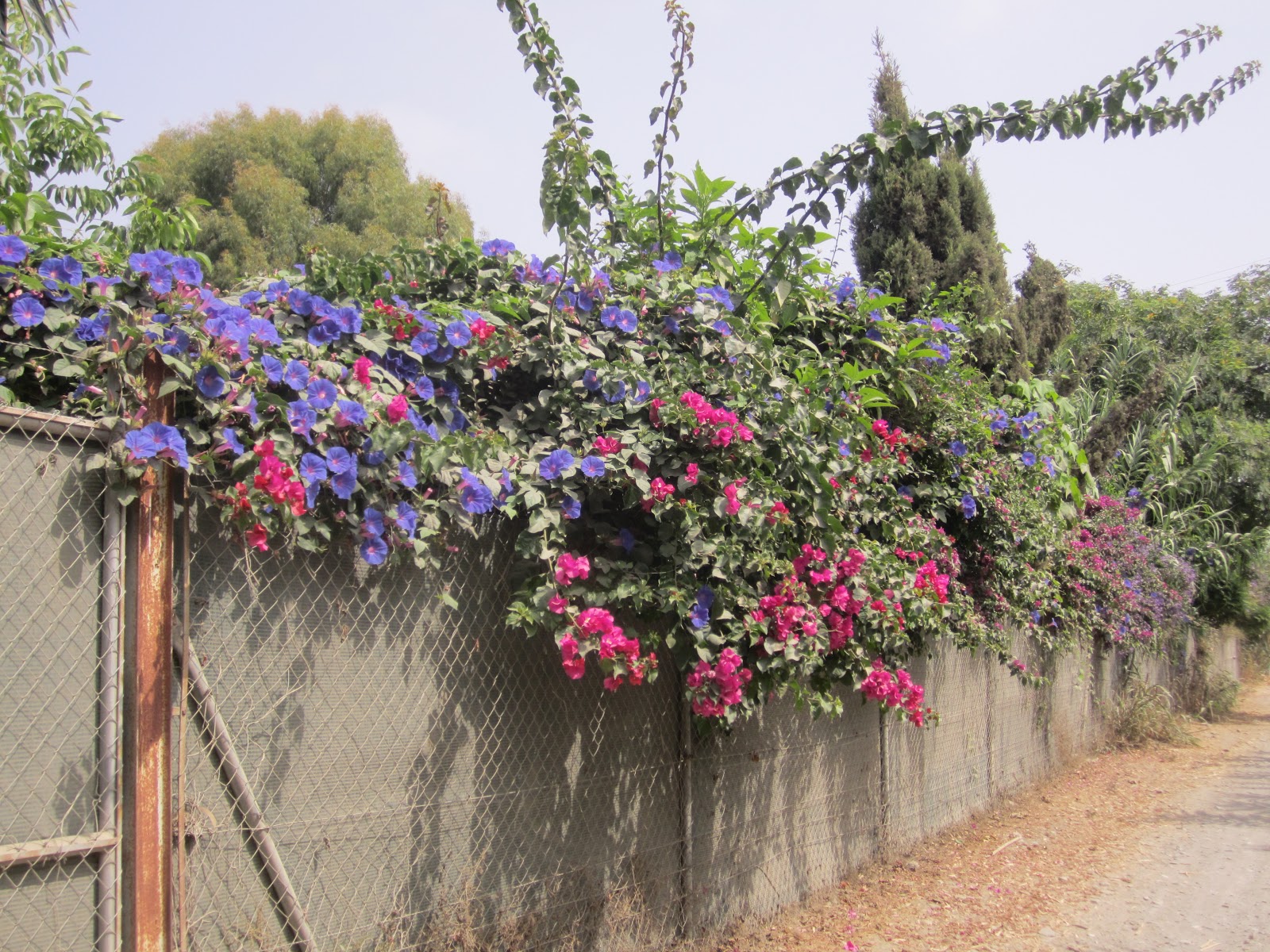
A Mongolian yurt in Andalucia suggests remoteness and retreat.  This wasn’t really the case here. Arriving at 10pm, we were assailed by the heady smell of bougainvillea and oleander and the tick, tick, ticking of the automatic watering system. 
The yurt was positioned by a gate with parking space for two cars and a path to a wooden structure, comprising a kitchen and bathroom and dining areas outside. At the other end of the garden were two pools, one a water feature housing carp, the other an oversized paddling pool, which our hosts would tend lovingly during our week long stay. Nocturnal excursions to the loo were easily achieved as the path flooded with light on passing.  Inside the yurt was dominated by a fine double bed, underneath a circular gap in the roof, which revealed the stars at night, although for more sublunary souls there was Sky TV and Wi-Fi.

In the distance, you could hear the rumble of traffic streaming along the coast.  I relinquished the idea of silence, punctuated only by the cry of vultures and the clanging of goat bells.  Instead early the next morning we were woken up by a rhythmic ringing sound, as Pepe, the local farmer trundled his oxen cart to the local market.  Another reason for having ear plugs.


I was intrigued by the juxtaposition of tourism and agriculture: apartment blocks beside a field of goats; a vegetable patch that merged into a site for billboards.  It was easy to avoid roads and in time the traffic sounds faded into my unconscious.  As the July temperatures crept up into the high thirties, we wanted to bathe.  The back way took us past acequias which irrigated fields of cucumber, courgette and pepper, and a simple smallholding with two chairs, a radio and a skittish kitten. We found the beach eventually with its basic beach bar and two types of gin.

Carol and Richard told us how they had escaped the rat race to live a simple life.  Here it was all around us in abundance.

You can find out more about Glamping in Almayate on Carol and Richard's website: http://www.glampingspain.co.uk

Monday, 10 December 2012

Wreath making in Hornsey Vale Community Centre

From this...

To this...
And this..

And this...
And this...


And this...


 And this...
And this...


And this...


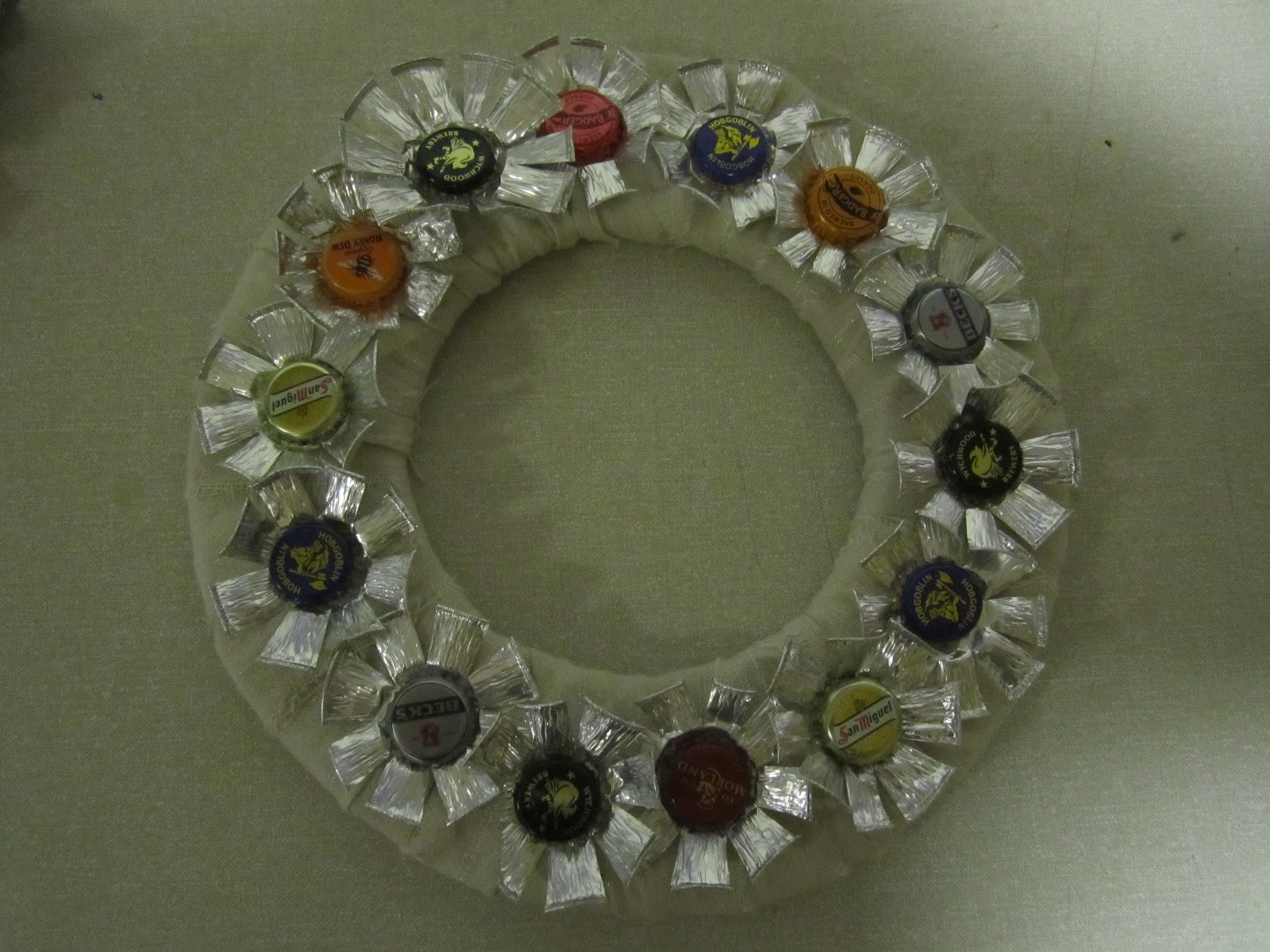
Approximate materials used: twelve daily lens foils (at least), eleven bottle caps, ten cardboard rings, nine bits of jigsaw, eight Christmas cards, seven metal studs, six mince pie cases, five felt strips, four wraps of twine, three baubles, two serviettes and a sparkly, charity shop scarf. 

And of course, the people who made them: Lynne, Michele, Alex, Pamela and Gillian.

The wreaths will be on display in Hornsey Library Cafe until Sunday 16 December.  They look even nicer in real life!

Next event:  Make a wreath for your front door in Stationers Park on Friday 14 and Saturday 15 December 1.30-3.30 pm.